Loading...
← Journal
What Good Trainers Get Wrong·5 min read
You Don't Need More Clients. You Need Better Ones.
Adding clients to a broken business model doesn't fix the business. Here's how to attract the ones who value your work and stick around.
Most trainers I talk to think their biggest problem is not having enough clients. When I ask what would change if they had five more, the answer is almost always the same: more money. Less stress. More stability.
But when I ask what their current clients are like, a different picture shows up. Late cancellations. Price negotiations every few months. People who don't follow the program between sessions and then wonder why they're not seeing results. Clients who treat training like a chore and their trainer like a luxury they're not sure they can justify.
Adding five more of those people won't fix anything. It'll just make you busier and more tired.
The volume trap
The instinct to chase volume makes sense on paper. More clients means more revenue. More revenue means more security. So you drop your rates a little to fill your schedule. You take on anyone who's willing to pay. You say yes to time slots you'd rather not work because an empty hour feels like lost money.
And slowly, without realizing it, you've built a business that runs you instead of the other way around. Your schedule is packed but your income is mediocre because your rates are too low. Your energy is spent on clients who don't value the work, which means you have less to give the ones who do.
This is the volume trap, and it's one of the most common mistakes good trainers make. Not bad trainers. Good ones. The ones who care about doing quality work but haven't figured out the business side yet.
What "better clients" actually means
When I say better clients, I don't mean wealthier clients or easier clients. I mean clients who are a good fit for the kind of training you do.
A better client shows up consistently. Not perfectly. Consistently. They respect your time and your expertise. They follow through on what you give them between sessions, or at least they're honest when they don't. They see training as an investment, not an expense. They refer other people like themselves.
Better clients also tend to stay longer. A client who values what you do and sees results doesn't leave after three months. They become a two-year client, a five-year client. That kind of retention changes the math on everything. You don't need 30 clients when you have 15 who stay.
The trainers I know who've figured this out don't just make more money. They enjoy their work more. They're less burned out. They have the energy to actually coach instead of just managing a schedule.
How to attract the right people
This starts with how you price your sessions. Your rate is a filter. When you undercharge, you attract people who are shopping on price. When you charge what your work is worth, you attract people who are shopping on value. These are fundamentally different populations and they behave differently as clients.
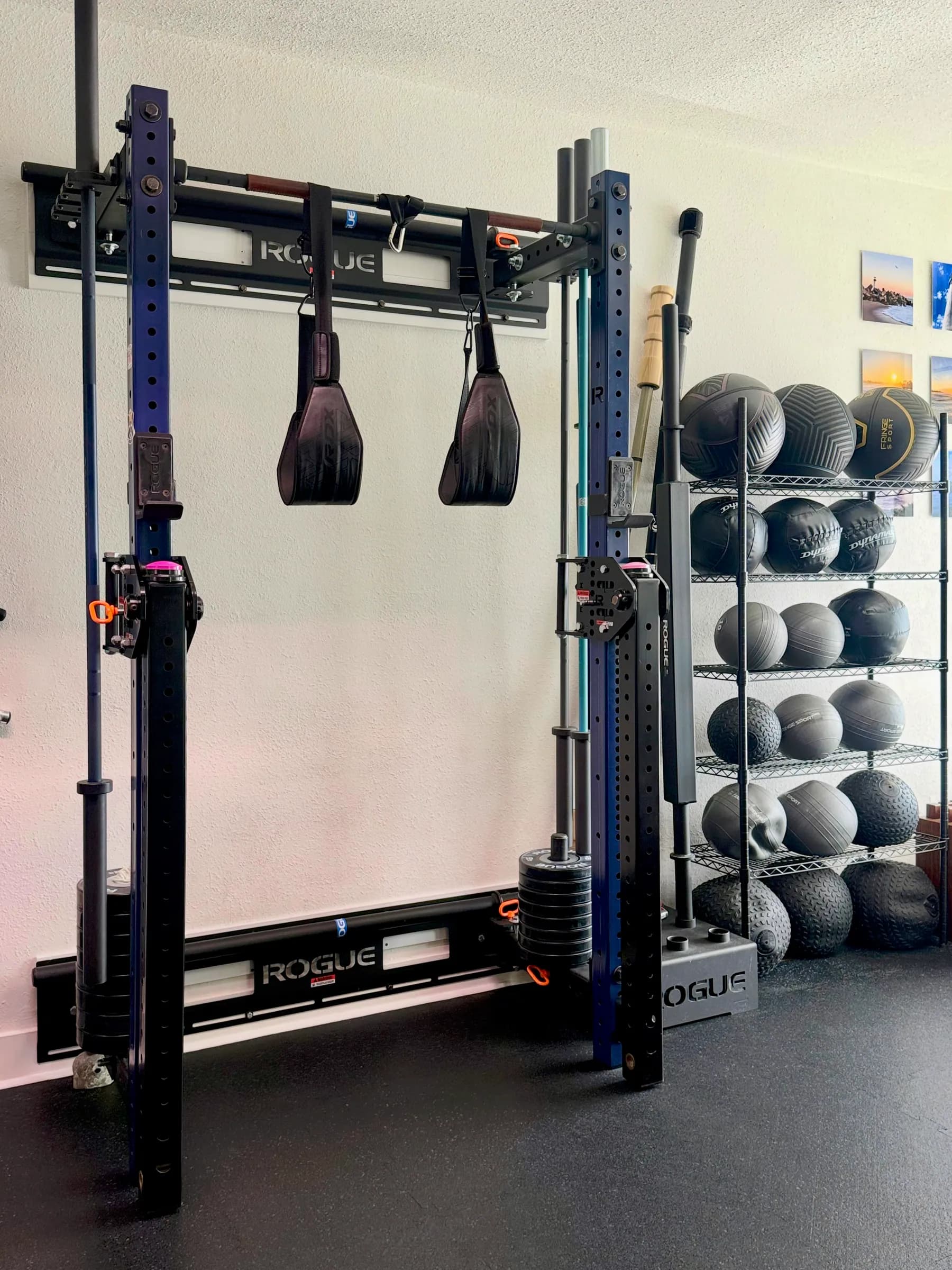
It also starts with where you train. The environment you work in tells potential clients who you are before you say a word. If you're training people in a dim corner of a crowded commercial gym, you're signaling something about the experience they can expect. If you're working in a space that's clean, intentional, and designed for quality coaching, you're signaling something very different.
This is one of the reasons the profit calculator exists. Trainers look at the cost of a premium training space and think "I can't afford that." But the real question is what you can charge when you train in a space that matches the quality of your work. Clients who walk into a facility with natural light, plants, equipment that's maintained to a standard they've never seen before, and air that doesn't smell like rubber. Those clients don't push back on your rates. They expect to pay for quality because everything around them says quality.
Stop marketing to everyone
Most trainers market like they're trying to reach every person in their city who might want personal training. That's a losing strategy. You end up competing on price with every other trainer, every gym, every app, every YouTube video.
Instead, get specific. Who do you work best with? What kind of client gets the best results with your approach? What problems do you solve that not every trainer can?
When you narrow your focus, you don't shrink your potential. You sharpen it. The trainer who says "I work with busy professionals over 40 who want to move better and stay active for the next 30 years" is more compelling than the one who says "I help people reach their fitness goals." One of those is a person. The other is a template.
Your content, your conversations, your referral network should all point toward the same specific kind of person. Not everyone. The right ones.
The math that matters
Here's a scenario. Trainer A has 25 clients paying $70 per session, averaging 1.2 sessions per week each. That's roughly $8,400 a month in gross revenue. Sounds decent. But with 30 sessions a week, high turnover, and constant marketing to replace the ones who leave, the actual take-home after expenses and the time spent finding new clients isn't what it looks like.
Trainer B has 14 clients paying $120 per session, averaging 1.8 sessions per week each. That's roughly $12,100 a month. Fewer sessions. Less turnover because these clients stick. More time for programming, professional development, and actually having a life outside the gym.
Same profession. Same city. Completely different experience.
The difference between these two trainers isn't talent. It's positioning. It's the space they work in, the rate they charge, the clients they attract, and the ones they're willing to let go of.
The hard part
The hardest thing about shifting from volume to quality is saying no. No to the client who wants a discount. No to the time slot that would wreck your schedule. No to the person who's clearly not a good fit but represents a paycheck.
Every trainer who's made this transition will tell you the same thing. It's uncomfortable for a month or two. And then it's the best decision they ever made.
You don't need more clients. You need the right ones, the right rates, and a space that makes both of those things easier. If you want to see what the numbers look like for your specific situation, the Mavericks profit calculator is a good place to start.
The room is a few blocks from the water.
 Santa Cruz coast
Personal training
Private, one-on-one sessions with a coach matched to your goals.
Book a sessionFind your fit
Tell us what you're working on. We'll point you at the right coach on the floor.
Start hereMeet the team
Browse the full directory of Mavericks Fitness coaches and their specialties.
See directoryFor trainers
Rent the studio at a flat rate. Bring your clients. Keep your rate.
See the offer