Loading...
← Journal
Why Your Space Matters·5 min read
Why I Put Plants in a Gym (And Why It Matters More Than You Think)
Plants in a gym aren't decoration. Research shows they reduce stress, improve air quality, and change how people feel about a training space.
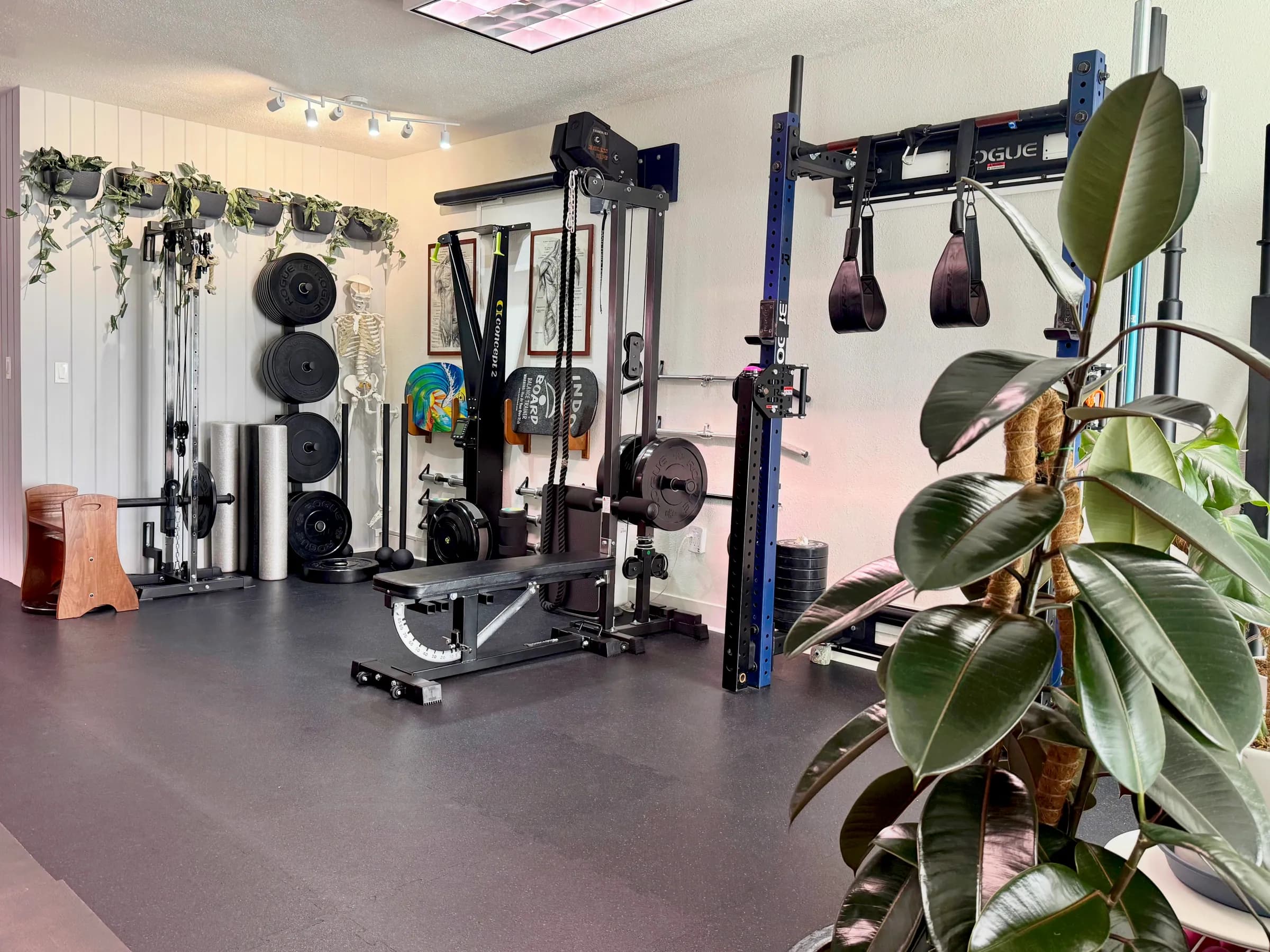
When people first walk into Mavericks, the plants get mentioned more than anything else. Not the equipment. Not the flooring. Not the layout. The plants.
It's usually a comment with a question underneath it. "I've never been in a gym with plants." The unspoken question being: why? Is this a gym or a wellness center? Are you serious about training or is this some aesthetic play?
The answer is yes to all of it. The plants are there because the training is serious. Not despite it.
The science nobody in fitness reads
There's a body of research in environmental psychology about something called biophilic design. The core idea is that humans have an innate affinity for natural elements, and environments that incorporate living things, natural materials, and organic shapes measurably affect mood, stress levels, cognitive function, and perceived comfort.
This isn't fringe science. It's been applied in hospital design, where patients in rooms with plants recover faster. In office design, where workers in biophilic environments report lower stress and higher productivity. In school design, where classrooms with natural elements improve student attention and test scores.
The fitness industry has largely ignored this research. Gyms are designed around equipment density, mirror placement, and traffic flow. The environment is treated as a container for the workout, not as a variable that affects the workout itself.
But it does affect it. The same way natural light and fresh air affect performance and mood, the presence of living plants in a training space changes the psychological experience of being there.
What plants actually do in a training environment
The effects are both measurable and felt.
Stress reduction. Cortisol levels decrease in the presence of plants. This isn't speculation. It's been measured in controlled studies. For a client walking into a training session after a stressful workday, the environment they enter either adds to their stress or begins reducing it before the warmup starts. A space with plants does the latter.
This matters for training outcomes. A client whose stress response is already dialing down when the session begins will have a better training session. They'll be more present, more receptive to coaching, and better able to access parasympathetic recovery between sets. Over months of training, those small advantages compound into meaningfully different results.
Air quality. Plants improve indoor air quality by absorbing certain volatile organic compounds and producing oxygen. The effect from a handful of potted plants isn't transformational, but in a training space where people are breathing hard, any improvement in air quality is relevant. Combined with proper ventilation, plants contribute to a breathing environment that supports performance.
Perceived quality. This is the business case. A training space with plants reads as intentional, cared for, and premium. It signals that someone thought about the experience beyond the squat rack. For clients evaluating whether your rate is justified, environmental quality is part of the equation. Plants are one of the simplest, lowest-cost ways to elevate the perceived quality of a space.
I talked about privacy changing the training experience earlier in this series. Plants contribute to that too. Strategic placement of larger plants creates natural visual barriers that add a sense of enclosure without walls. They soften the space without closing it in.
The objection every gym owner has
"Plants die in gyms." This is true if you choose the wrong plants and ignore them. It's not true as a universal law.
Pothos, snake plants, ZZ plants, and certain philodendrons thrive in indoor environments with minimal care. They tolerate inconsistent watering, variable light, and the occasional bump from a client backing into them. They're not fragile ornamentals. They're resilient organisms that happen to look good and improve the air.
The maintenance is about fifteen minutes a week for a space with a dozen plants. Water on a schedule. Wipe the leaves occasionally. Replace the rare one that doesn't make it. Compared to the time spent cleaning equipment or organizing storage, plant care is trivial.
The real reason most gym owners don't have plants is that they've never considered the space as anything other than a warehouse for equipment. The idea that the environment could actively contribute to client outcomes isn't part of the standard gym-design conversation. That's a missed opportunity.
Small details, big signals
Plants are one example of a larger principle. The details of your training environment communicate your standards before you say a word.
A clean floor says you care about hygiene. Quality equipment says you care about the training tools. Good lighting says you care about the experience. And plants say you care about the whole person, not just the workout.
Clients pick up on these signals whether they articulate them or not. A client who trains in a space that feels alive and intentional develops a different relationship with training than one who works out under fluorescent lights on rubber mats that smell like a tire shop. The first client looks forward to coming in. The second one just shows up.
Looking forward to coming in is one of the strongest predictors of long-term adherence. And long-term adherence is the only thing that produces lasting results. So yes, the plants matter. Not as decoration. As infrastructure for the outcome your client is paying for.
The broader point
The next post in this series covers how your training space functions as part of your brand. Plants fit into that conversation too. But the deeper point is simpler.
If you're a trainer who cares about movement quality, who coaches with attention and intention, who builds real relationships with clients, your environment should reflect that. Every element of the space should say the same thing your coaching says: this is thoughtful, this is purposeful, and you deserve to train somewhere that takes the work as seriously as you do.
At Mavericks, the plants are part of that message. So is everything else. Because the space isn't separate from the training. It's the context the training lives in. And context shapes everything.
The room is a few blocks from the water.
 Santa Cruz coast
Personal training
Private, one-on-one sessions with a coach matched to your goals.
Book a sessionFind your fit
Tell us what you're working on. We'll point you at the right coach on the floor.
Start hereMeet the team
Browse the full directory of Mavericks Fitness coaches and their specialties.
See directoryFor trainers
Rent the studio at a flat rate. Bring your clients. Keep your rate.
See the offer