Loading...
← Journal
Why Your Space Matters·4 min read
Natural Light, Fresh Air, and the Science of Where You Train
Natural light and fresh air aren't gym perks. Research shows they affect performance, recovery, mood, and whether clients keep showing up.
Walk into most commercial gyms and the first thing you notice is the lighting. Banks of fluorescent tubes humming overhead, casting everything in that flat, bluish wash that makes human skin look slightly ill. The air is recycled, thick with the smell of rubber mats and cleaning products and whatever everyone else in the room is doing. The windows, if there are any, are tinted or covered because somebody decided that natural light creates glare on the mirror wall.
Now imagine a different space. Morning light coming through windows. Air that moves. The kind of environment where you'd actually want to spend an hour.
The difference isn't just aesthetic. It's physiological. And it affects your clients more than most trainers realize.
What light does to the body
Exposure to natural light during the day regulates circadian rhythm, the internal clock that governs sleep, hormone production, mood, and energy levels. This isn't wellness speculation. It's basic photobiology that's been studied extensively.
When clients train under natural light, their bodies receive a time-of-day signal that reinforces healthy circadian function. Morning light exposure in particular has been shown to improve sleep quality that night, which directly affects recovery, which directly affects training outcomes.
Artificial light doesn't provide the same signal. The spectrum is wrong, the intensity is too low, and the timing cues are absent. A client who trains at 7 AM under fluorescent lights in a windowless gym misses the circadian benefit they would have gotten from the same session in a space with natural light.
This matters most for the clients who are already struggling with sleep, stress, and recovery. Which, if you're training working professionals in their 30s, 40s, and 50s, is most of your clients.
What air quality does to performance
Indoor air quality in gyms is a problem that nobody talks about because nobody measures it. But the research is clear. Elevated CO2 levels, which accumulate in poorly ventilated spaces with multiple people exercising, impair cognitive function and reduce exercise performance.
In practical terms, a client training in a stuffy room is working harder for worse results than the same client in a well-ventilated space. Their perceived exertion is higher. Their decision-making during complex movements is slightly impaired. Their recovery between sets is slower.
Fresh air isn't a luxury. It's a performance variable.
The equipment you train on matters. Your coaching matters. But if the air your client is breathing is compromised, you're fighting an invisible headwind on every session.
The psychological layer
Beyond the physiology, there's a psychological dimension to environmental quality that affects client behavior.
People feel better in natural light. This isn't subjective. Studies on workplace design, hospital design, and school design consistently show that natural light improves mood, reduces stress hormones, and increases satisfaction with the experience of being in a space.
Applied to training: a client who feels better when they walk into your training space is more likely to look forward to sessions. More likely to show up consistently. More likely to push through the difficult middle period of a training program where motivation dips and habits haven't fully formed yet.
Client retention is partly about coaching quality and partly about the experience surrounding the coaching. When the space itself makes people feel good, you start every session with a small advantage that compounds over time. I covered the broader relationship between environment and retention in a post about why your best clients leave. The space is always part of that equation.
Why most gyms get this wrong
The economics of commercial gyms push in the opposite direction of everything I've described. Natural light requires windows, which reduce usable wall space for equipment. Fresh air requires ventilation systems that cost more to install and operate. Lower density means less revenue per square foot.
So the standard gym is an interior box. Maximum equipment density. Recirculated air. Fluorescent lights. The business model optimizes for membership volume, not training quality. And the environment reflects it.
This isn't a critique of every gym. It's an observation about incentive structures. When the business model is based on thousands of members paying $30 a month, the environment is designed for throughput. When the model is based on quality training at a higher price point, the environment can be designed for the training itself.
What this means for independent trainers
If you're choosing where to train clients, environmental quality should be weighted heavily in your decision. Not because clients explicitly ask for natural light and fresh air. Most don't. But because these factors silently influence how they feel during sessions, how well they recover, and whether they keep coming back.
A beautiful space with natural light and good air allows you to charge appropriately. Clients who walk into that kind of environment understand immediately that this is a different product than the gym down the street. You don't have to explain why your rate is higher. The space explains it for you.
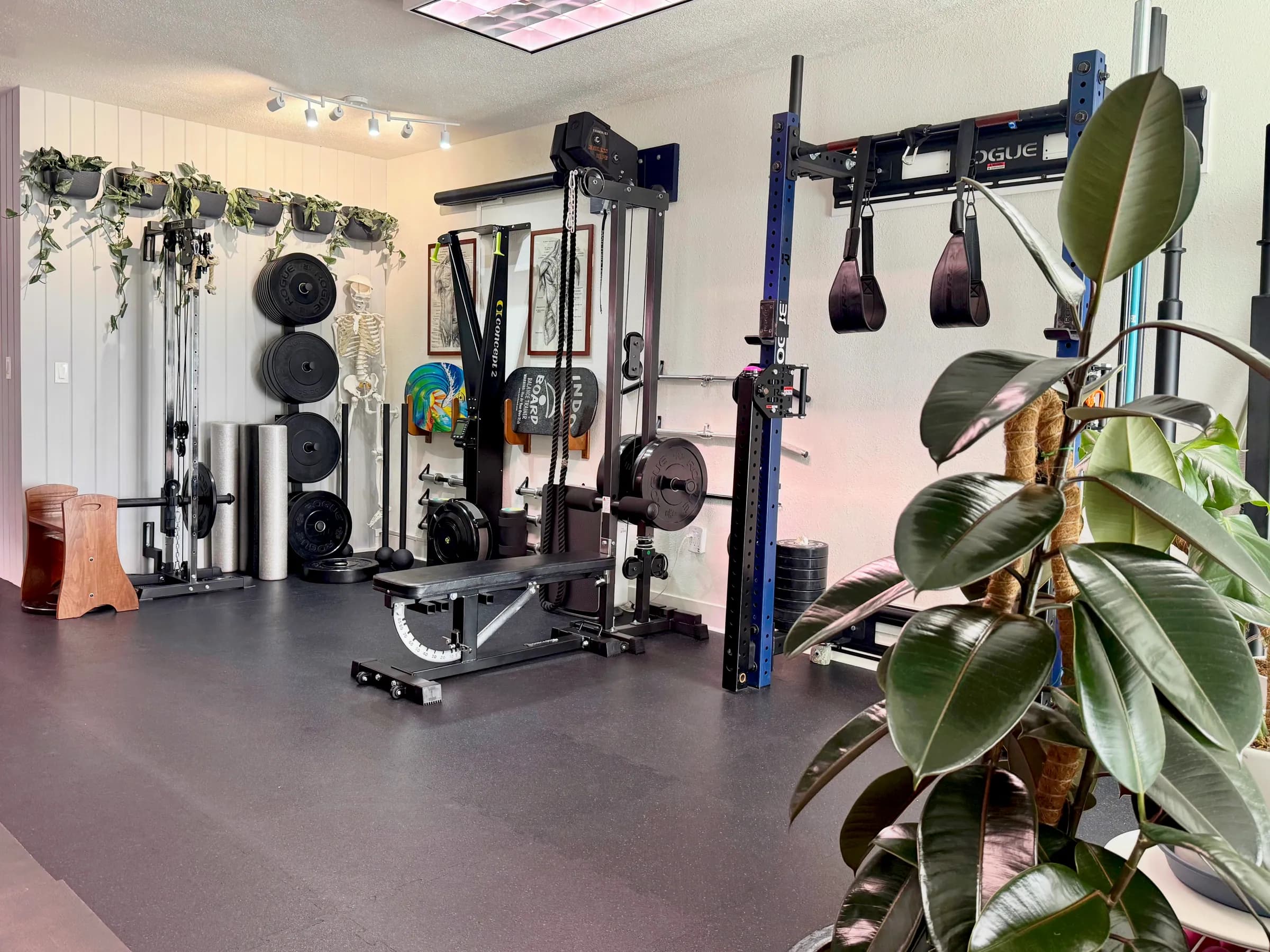
This is one of the things we thought about carefully when designing Mavericks. Natural light. Fresh air. A space that feels like somewhere you'd want to be, not somewhere you endure. Because the environment isn't separate from the training. It is part of the training.
The simple test
Next time you're in your training space, close your eyes for ten seconds. Then open them. What do you see first? How does the light feel? What does the air smell like? How does the room make you feel?
Your clients are having that same experience every time they walk in. And it's shaping their relationship with you, with training, and with whether they'll still be showing up six months from now.
The room is a few blocks from the water.
 Santa Cruz coast
Personal training
Private, one-on-one sessions with a coach matched to your goals.
Book a sessionFind your fit
Tell us what you're working on. We'll point you at the right coach on the floor.
Start hereMeet the team
Browse the full directory of Mavericks Fitness coaches and their specialties.
See directoryFor trainers
Rent the studio at a flat rate. Bring your clients. Keep your rate.
See the offer