Loading...
← Journal
Why Your Space Matters·4 min read
Privacy Changes Everything About a Training Session
When nobody's watching, clients train differently. Why privacy in personal training isn't a luxury. It's what makes real coaching possible.
There's a moment in almost every training session where the client has to do something they're not good at. A movement that's awkward. A weight that's humbling. A stretch that puts them in a position they'd never willingly hold in front of strangers.
In a crowded gym, that moment gets skipped. Not intentionally. The client just pulls back. They rush through it. They laugh it off. They ask to do something else. The discomfort of being seen struggling is stronger than the desire to improve.
In a private space, that same moment becomes the most productive part of the session.
The audience effect
Psychology has a name for this. Social facilitation theory says that the presence of others improves performance on well-learned tasks but impairs performance on new or difficult ones. In practical terms, someone who already has a solid deadlift will lift a little more with people watching. Someone learning to hinge for the first time will do it worse.
Most of what happens in a quality training session falls into the second category. You're asking clients to learn. To try movements they haven't mastered. To go slow when speed would hide the gaps. To be honest about what hurts and what feels wrong.
All of that requires vulnerability. And vulnerability requires safety. Not emotional safety in some abstract therapeutic sense. Actual, physical privacy. No one watching. No one judging. No one filming their own workout in the mirror six feet away.
What changes when the audience disappears
The conversations change first. In a private training environment, clients tell you things they wouldn't say in a public gym. That their back has been bothering them for three months and they've been hiding it. That they feel self-conscious about a part of their body. That they're going through something at home that's affecting their sleep and their energy and their willingness to push.
This information transforms your coaching. A client who tells you about their back pain early gets programming that addresses it. A client who hides it gets programming that makes it worse. The only difference between those two outcomes is whether the environment made honesty feel safe.
The movement changes too. Clients who know no one is watching will try things. They'll attempt the single-leg exercise that makes them wobble. They'll hold the position that looks silly but builds exactly what they need. They'll fail a rep without embarrassment and try again.
This is where movement quality gets built. Not in the exercises that look impressive. In the ones that look unglamorous and require focused, repetitive practice in an environment where looking unglamorous is perfectly fine.
The trainer changes too
This is the part that doesn't get discussed enough. Privacy doesn't just change the client. It changes you.
In a crowded gym, trainers perform. Whether they realize it or not, they're aware of being watched. They pick exercises that look impressive. They coach louder than necessary. They maintain a certain energy that's partially for the client and partially for the room.
In a private space, the performance pressure drops away. You can be quiet when quiet is what the moment needs. You can spend four minutes on a single movement without feeling like you're not providing enough entertainment. You can sit with a client during a stretch and have a conversation about what they're feeling instead of projecting coaching across a noisy floor.
The quality of attention you can bring to a session in a private environment is fundamentally different from what's possible in a public one. I've trained in both. The coaching I do in private is better. Not because I'm trying harder. Because the space allows me to focus entirely on the person in front of me.
Privacy is not isolation
There's an important distinction here. Privacy means the client isn't being observed by strangers during their session. It doesn't mean training in a dark basement alone.
The best private training environments have natural light, good air, quality equipment, and a feeling of openness. They're not cramped or clinical. They're spaces that feel good to be in. The privacy comes from the design and the scheduling, not from walls closing in.
At Mavericks, the space is open and well-lit but structured so that training sessions happen without an audience. You get the benefits of a professional facility without the fishbowl feeling of a commercial gym floor. That combination, private but not claustrophobic, professional but not sterile, is harder to find than you'd think.
The business case
Privacy isn't just good for training. It's good for business.
Clients who train in private settings stay longer. They build deeper relationships with their trainers. They refer friends more readily because the experience feels exclusive and personal in a way that a gym membership doesn't.
They also pay more willingly. When a client walks into a space that's clearly designed for focused, one-on-one work, the rate makes sense to them. They're not comparing your session to the $30-a-month gym down the street. They're evaluating a completely different product.
Pricing your sessions becomes easier when the environment justifies the rate without you having to explain it. The space does the selling before you open your mouth.
The uncomfortable truth
Most trainers train in public spaces because that's what's available and affordable. There's no shame in that. But if you've ever had a session where you knew the client needed something they weren't willing to do because of who was around them, you already understand what privacy is worth.
The best coaching happens when both people in the room can focus entirely on the work. No audience. No performance. Just a trainer and a client figuring out what the body needs and working on it without distraction.
That's not a luxury. That's what personal training is supposed to be.
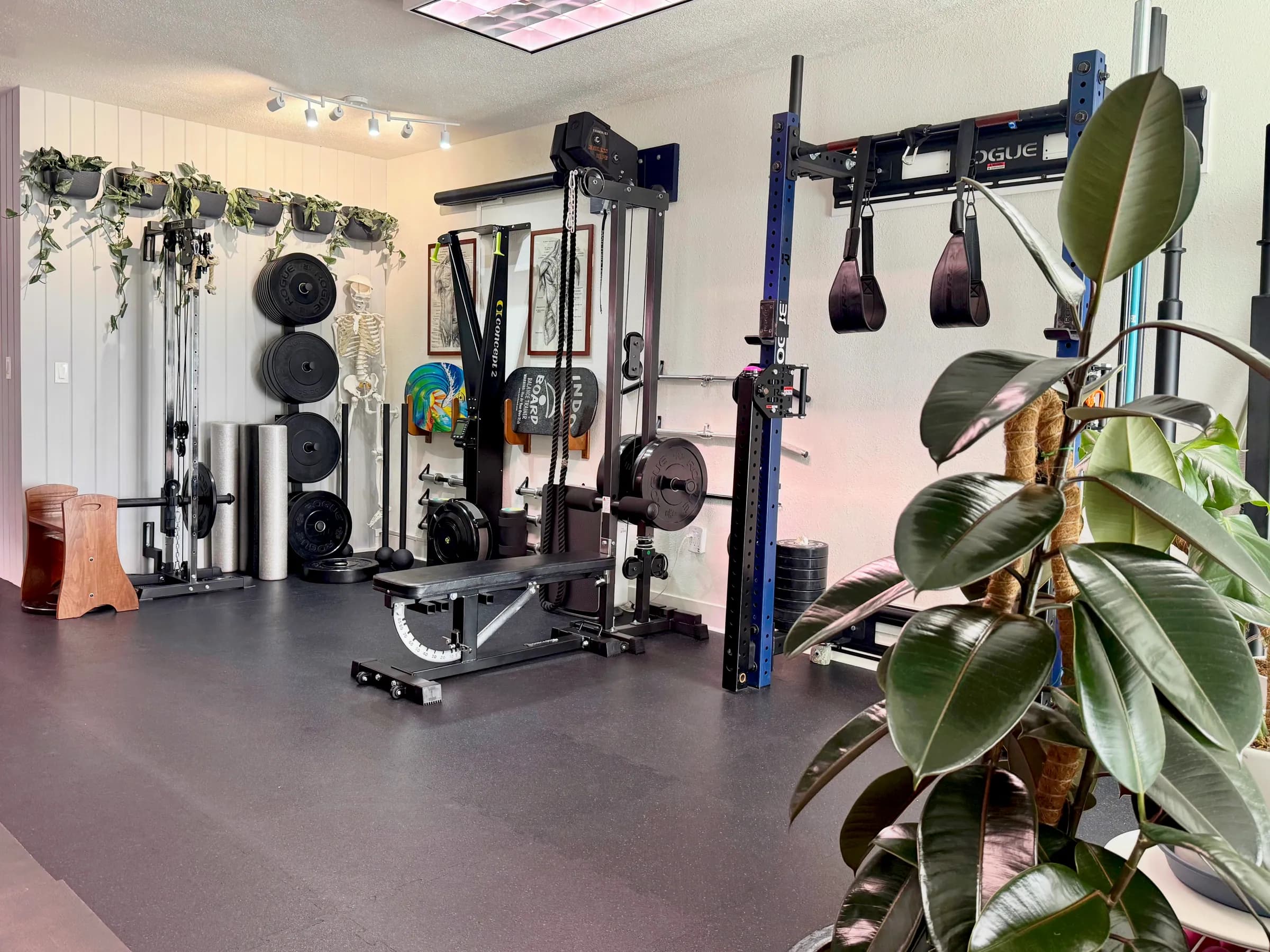
The room is a few blocks from the water.
 Santa Cruz coast
Personal training
Private, one-on-one sessions with a coach matched to your goals.
Book a sessionFind your fit
Tell us what you're working on. We'll point you at the right coach on the floor.
Start hereMeet the team
Browse the full directory of Mavericks Fitness coaches and their specialties.
See directoryFor trainers
Rent the studio at a flat rate. Bring your clients. Keep your rate.
See the offer