Loading...
← Journal
Why Your Space Matters·5 min read
The Equipment You Train On Is Coaching Your Clients For You
Your training equipment cues movement patterns whether you realize it or not. Here's why equipment quality is a coaching decision, not a budget line.
I spent three years training clients at a commercial gym where the cable machine pulled to the left. Not dramatically. Just enough that every lat pulldown was slightly off-center. Enough that my clients' bodies were quietly compensating every single rep without either of us realizing it at first.
I mentioned it to management. Twice. Nothing happened. The machine stayed. The pull stayed. And every trainer in that gym kept loading clients onto it like it was fine.
When I finally started paying closer attention to what the equipment was actually doing to movement patterns, it changed how I thought about training space entirely. That crooked cable wasn't just an annoyance. It was a bad coach, running a parallel lesson plan that contradicted everything I was trying to teach.
Equipment Cues Movement. Always.
Every piece of equipment in your training space is giving your client feedback. The angle of a handle, the path of a cable, the resistance curve of a machine, the stability of a bench. All of it talks to your client's nervous system. All of it shapes the movement before you open your mouth.
Good equipment cues good form. A well-designed cable machine with a smooth, consistent pull lets your client feel the target muscle working. A quality adjustable bench that's actually stable lets them focus on the press instead of subconsciously bracing against wobble. The right kettlebell handle sits in the hand in a way that naturally promotes a proper grip and wrist position.
Bad equipment does the opposite. It teaches compensation. It introduces variables you didn't program and can't control. And the worst part is that most trainers don't even notice, because they've been working with mediocre equipment so long that they've normalized it.
The Coaching You Can't See
Think about this for a second. You spend an hour with a client. You cue them carefully, correct their positioning, teach them to feel the difference between a good rep and a sloppy one. That's skilled work. That's your craft.
Now imagine that the equipment itself is undermining half of those cues. The bench has a slight lean. The barbell has inconsistent knurling. The resistance band has dead spots. Your client is processing two sets of instructions at once: yours and the equipment's. And the equipment's instructions are constant, physical, and unconscious.
This isn't hypothetical. This is what happens in most commercial gyms every day. The trainers are good. The equipment is working against them.
It's Not About Having Expensive Stuff
I want to be clear about something. This isn't about having the fanciest equipment or the newest models. It's about having equipment that works correctly and is maintained to a standard where it keeps working correctly.
A simple flat bench that's rock-solid and properly surfaced is worth more than a fancy adjustable bench that wobbles at certain angles. A set of dumbbells with good knurling and accurate weights beats a wall of shiny chrome that's never been calibrated.
The question isn't "how much did this cost?" The question is "what is this teaching my client's body while I'm teaching their mind?"
At Mavericks, every piece of equipment was chosen for a specific reason. Nothing is filler. Nothing is there because it came with a package deal or because it looks good on Instagram. Every tool earns its place by supporting the movement patterns we're actually trying to develop.
What to Look For
If you're evaluating the equipment in your current training space, here are the things that matter most.
Cable paths. Is the pull smooth and consistent through the full range of motion? Or does it catch, skip, or drift? Your client's body responds to every inconsistency, even the ones they can't articulate.
Bench stability. Does the bench shift, wobble, or flex under load? If your client has to stabilize against the equipment before they can stabilize the movement, you've added an uncontrolled variable.
Handle ergonomics. Do the grips fit a human hand in a way that promotes a natural wrist and forearm position? Or do they force an awkward angle that cascades up the chain?
Resistance curves. Does the resistance profile match the strength curve of the target movement? Cheap machines often have bizarre resistance curves that load the joint hardest at its most vulnerable position.
Maintenance. Is the equipment regularly serviced? Cables fray. Bearings wear. Upholstery cracks. A machine that was great two years ago and hasn't been touched since isn't great anymore.
The Trainers Who Get This
The trainers who think carefully about equipment as a coaching tool tend to be the same trainers who think carefully about movement quality in general. They're the ones who notice that their client's left shoulder hike during a row isn't just a cuing problem. It might be a setup problem. Or an equipment problem. Or both.
This kind of attention to detail is what separates training as a craft from training as a commodity. It's not about being obsessive. It's about recognizing that the environment you work in is always part of the session, whether you're paying attention to it or not.
Your Equipment Is Part of Your Reputation
Here's the business angle, because it matters. When a client trains on quality equipment in a well-maintained space, they feel the difference. They might not know the technical reasons. They might not be able to name what's different. But they know the session felt better. They know their body responded differently. And they associate that feeling with you.
That's your reputation being built, rep by rep, on a foundation you may or may not be controlling.
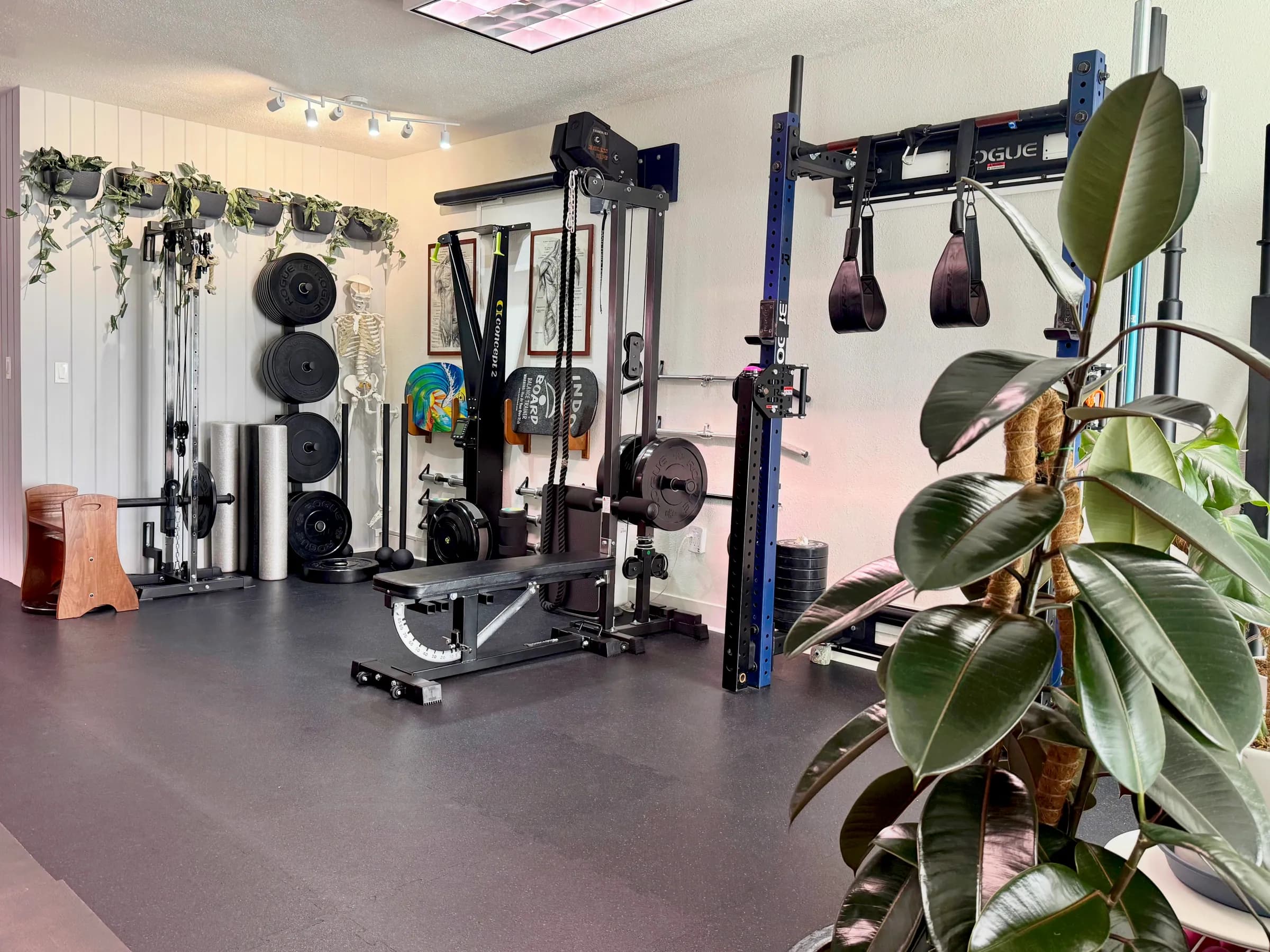
If you're curious about what a space looks like when every piece of equipment is chosen with intention, take a look at the workspace. Not because it's the only way to do things. But because it's one example of what happens when equipment selection is treated as a coaching decision, not a purchasing decision.
Your programming matters. Your cuing matters. But the tools your clients train on are talking to their bodies the entire session. It's worth making sure they're saying the right things.
The room is a few blocks from the water.
 Santa Cruz coast
Personal training
Private, one-on-one sessions with a coach matched to your goals.
Book a sessionFind your fit
Tell us what you're working on. We'll point you at the right coach on the floor.
Start hereMeet the team
Browse the full directory of Mavericks Fitness coaches and their specialties.
See directoryFor trainers
Rent the studio at a flat rate. Bring your clients. Keep your rate.
See the offer