Loading...
Paddle harder, pop up faster.
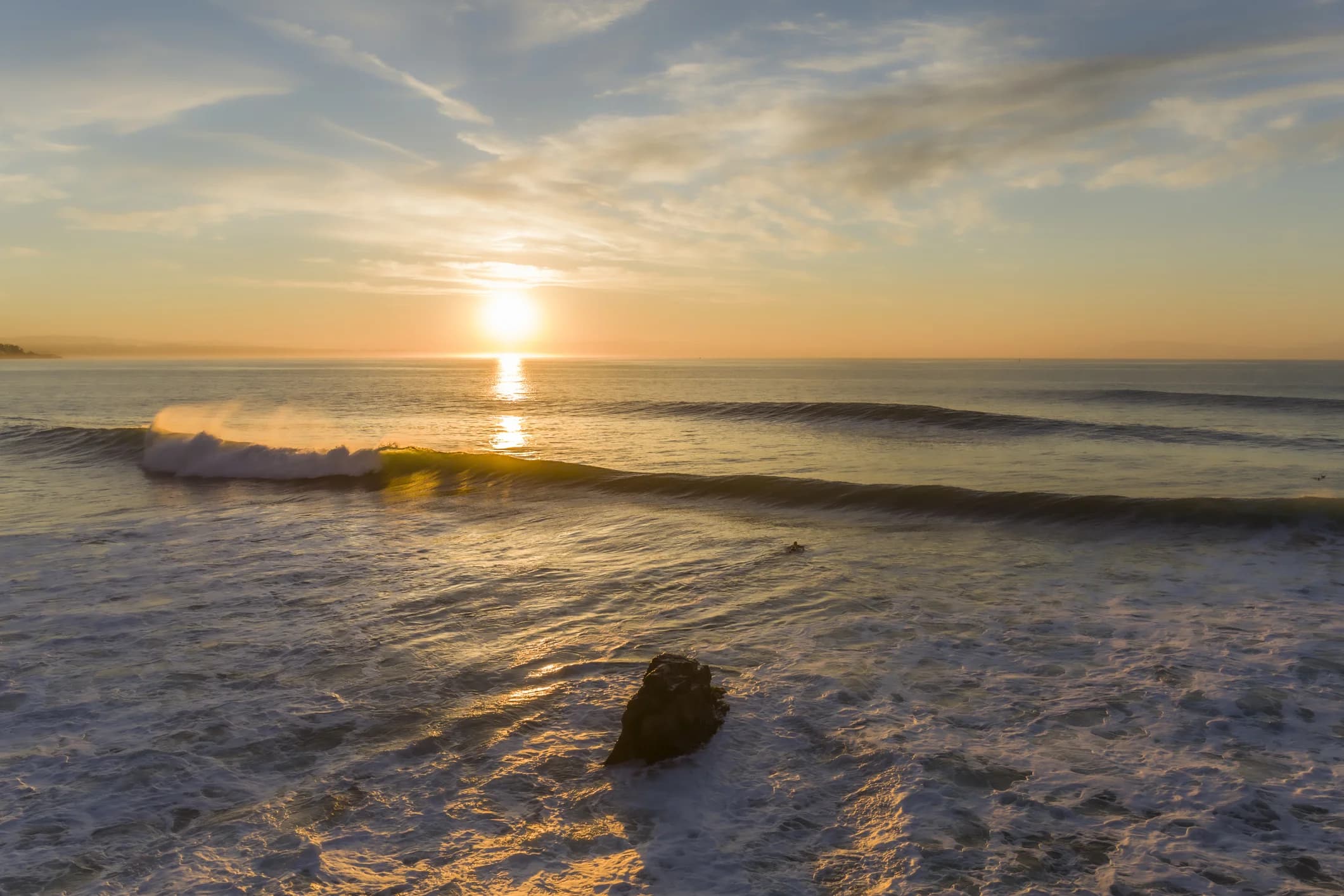
Santa Cruz is home to some of the world's most iconic surf breaks. Whether you're catching your first waves at Cowell's or charging Steamer Lane on a big day, surf-specific strength training changes how long and how well you surf. This is how we program it at Mavericks Fitness.
5Physical demands we program against
85-90%Of a surf session spent paddling
1 : 1One trainer, one client, every session
 The lineup
 Home break
 Cold water
Five physical demands of surfing.
01 · Paddle
Paddling power & endurance.
You spend 85-90% of your surf session paddling: out to the lineup, into waves, and repositioning between sets. Strong shoulders, lats, and core let you paddle efficiently and maintain power through long sessions.
Lats · deltoids · rotator cuff · serratus anterior · core stabilizers02 · Pop-up
Explosive pop-up power.
The pop-up requires explosive upper body pressing power combined with hip mobility and core control. A strong, quick pop-up gets you to your feet before the wave passes you by.
Chest · triceps · core · hip flexors · posterior chain03 · Rotate
Rotational power for turns.
Powerful turns require rotational strength through your core and hips. The ability to generate and control rotation separates good surfers from great ones.
Obliques · transverse abdominis · hip rotators · glutes04 · Legs
Lower body stability & power.
Your legs provide the stable platform for all surfing movements. Strong, stable legs let you maintain balance, absorb bumps, and generate power through turns.
Quads · glutes · hamstrings · calves · ankle stabilizers05 · Shoulders
Shoulder health & mobility.
Healthy shoulders are essential for surfing longevity. The repetitive overhead motion of paddling can lead to impingement and rotator cuff issues without proper strength and mobility work.
Rotator cuff · scapular stability · thoracic mobilityA sample surf week, on and off the board.
One example split we run with surfers. The specifics shift with your surf calendar, current shoulder health, and what your baseline assessment shows. The shape stays: paddle, pop, rotate, recover.
- Shoulder care. Regular rotator cuff strengthening and thoracic mobility work.
- Neck strength. Prevent whiplash injuries from wipeouts with neck strengthening exercises.
- Lower back health. Core stability work and proper pop-up mechanics.
- Ankle stability. Balance training and ankle strengthening to prevent sprains.
- Proper warm-up. Always warm up shoulders and hips before paddling out.
- Listen to your body. Rest when needed. Overuse injuries are common in surfing.
Monday · Paddling endurance
Swimming, rowing, or paddleboard; pull-ups, lat pulldowns. 60 minutes.
Tuesday · Surf session
Apply your training in the water. 2-3 hours.
Wednesday · Lower body & core
Squats, lunges, single-leg work, rotational core. 45 minutes.
Thursday · Explosive power
Plyometric push-ups, medicine ball throws, box jumps. 45 minutes.
Friday · Mobility & prehab
Shoulder mobility, rotator cuff work, yoga. 30-45 minutes.
Saturday · Long surf session
Extended time in the water. 3-4 hours.
Sunday · Active recovery
Easy swim, walk, or complete rest. 0-30 minutes.
Eight movements that translate to the wave.
Pull-ups & variations
Builds paddling strength and lat development. Progress from assisted to weighted.
Swimming (freestyle)
The most surf-specific cardio. Builds paddling endurance and shoulder conditioning.
Explosive push-ups
Develops pop-up power. Progress to clap push-ups and plyometric variations.
Turkish get-ups
Full-body movement that builds stability, coordination, and functional strength.
Rotational medicine ball throws
Develops explosive rotational power for powerful turns.
Single-leg squats
Builds unilateral leg strength and balance critical for surfing stance.
Indo board training
Improves balance, ankle stability, and surf-specific movement patterns.
Band pull-aparts
Strengthens rear delts and rotator cuff for shoulder health.
Train for what the coast actually asks.
Dawn patrolCold water adaptation
Build cardiovascular fitness to handle the increased metabolic demands of 50-60 °F water.
50-60 °F sessionsPower development
Santa Cruz waves require explosive paddling to catch them. Train for the burst, not just the base.
Explosive paddleDuck dive strength
Strong core and upper body for getting under bigger waves when the set rolls through.
Under the setRecovery capacity
Ability to bounce back quickly after hold-downs and wipeouts, then go again.
Back in the lineupStart here
Ready to improve your surfing?
Our trainers understand what Santa Cruz's powerful waves actually ask. Many of them surf the same breaks. Start with an assessment, match with a coach, or explore the movement work.